The Diminished 7th Chord in a Diatonic Context
Introduction
For this week's lesson we will be adding the diminished 7th chords to our compositional pallet. We'll start with them from a classical point of view, first as a dominant function and then as a secondary dominant function. Then we'll move onto a contemporary view in how these chords are used with jazz and popular music.
Finally. we will be asking our composers what approaches they take when first starting a composition.
Objectives
By the end of the lesson, you will be able to:
distinguish between different categories of diminished 7th chords in a diatonic context and understand their most typical resolution patterns
recognize and analyze all types of diminished 7th chords correctly in progression
express all contemporary diminished 7th chord types as chord scales
explore tensions in voicings
understand the conceptual use of the diminished triad and 7th chord in classical styles and recognize and appropriately analyze these harmonies in context
realize chord progressions involving diminished chords from figured bass with appropriate voice leading technique for classical styles
understand and comment on how a selection of professional composers feel about hand writing their compositions compared to using a notation program and how they feel it affects their work
Upholding Tradition: Uses of Diminished Triads and 7th Chords in Classical Style
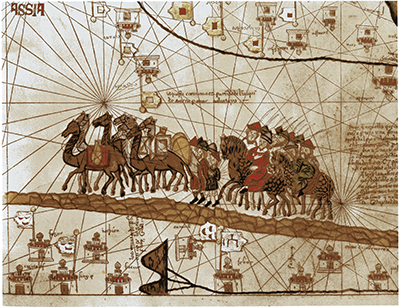
Caravane Marco Polo
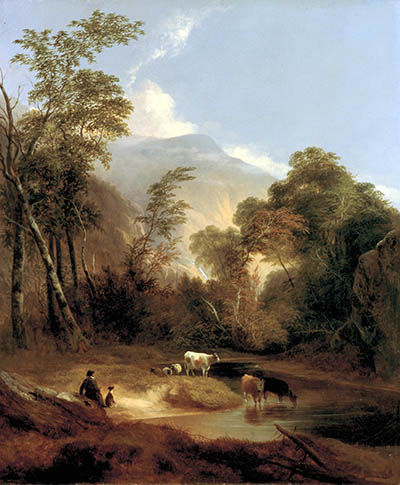
Marco Polo (1254-1324), the famous Italian merchant (and the namesake of a popular childhood game of call-and-response), wasn't the first European to reach China and travel through Asia, but he was the first to write a book about his experiences. The book, Livre des Merveilles du Monde (Book of the Marvels of the World), spread the word about silk, spices, tea, and exotic goods not available in Europe. A trade route that came to be known as the Silk Road developed. The sought-after Asian goods were traded for European goods such as steel, glass, and horses. In addition to goods, merchants also exchanged ideas, art, and music. Today, with the music of the world available at our fingertips, we can only imagine the wonder of the first musical encounters between the different cultures. Initially, the Silk Road consisted of just a few routes as is shown in the map directly below. As trade broadened, numerous routes became available as shown in the second map.
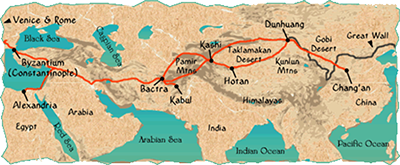
Silk Road
The new silk routes:

The New Silk Routes
The early Silk Road can be thought of as analogous to a dominant chord moving to tonic, providing just one route to the destination as we'll learn in this topic.
Resolutions in Classical Style
Example 1. V7 to I Showing Tritone Resolution B to C and F to E
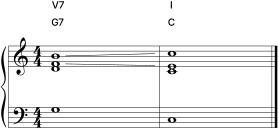
It is interesting and important to note that if the root of a V7 chord is dropped, we are left with a diminished triad built on the 7th scale degree. Both chords share the same tritone and therefore have the same tendency to resolve to the I chord. This new, but related chord, gives another dominant function route to the I chord.
Example 2. G7 and Bº
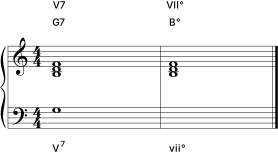
In classical music, the viiº chord is used as a dominant chord that usually resolves to the tonic I chord. In order to avoid parallel motion, it is most often found in the first inversion.
Example 3. viiº Resolving to I
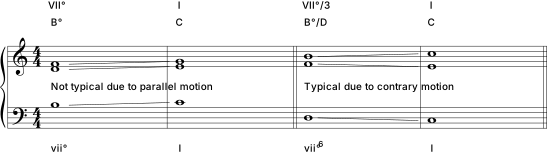
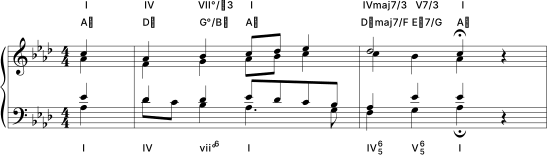
Some composers and theorists think of and use the viiº triad as a softer and somewhat weaker version of the V7 chord. Its pull towards tonic is weaker because it lacks the strong root motion 5 to 1 of the V7 chord. Example 4 shows the first inversion viiº triad acting as a dominant in a major key.
Example 4. First Inversion Diminished Triad in a Bach Chorale
Handel’s Use of the Diminished Triad
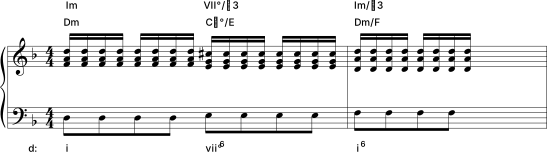
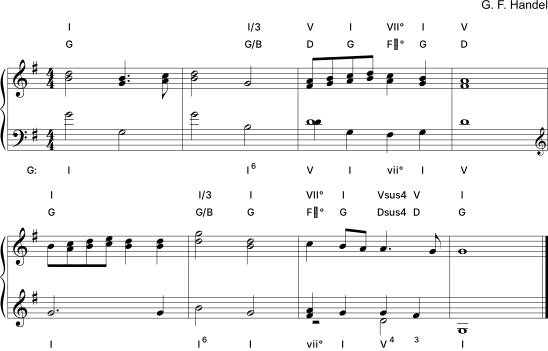
Example 5 shows the first inversion viiº triad acting as a dominant in a minor key and shows Handel's use of the diminished triad as a connector between I and i6. Listen how it creates motion and direction without being as emphatic as a V7 chord.
Example 5. First Inversion Diminished Triad in Handel's Messiah
The viiº triad is sometimes used in root position. In Example 6, Handel uses it to approach the tonic chord in this familiar excerpt from his oratorio Judas Maccabaeus. Listen to the excerpt carefully and see how the root position viiº chord resolves the tritone inward (C to B and F
Example 6. Root Position viiº Triad

Workshop: Classical Resolution Analysis
For this workshop:
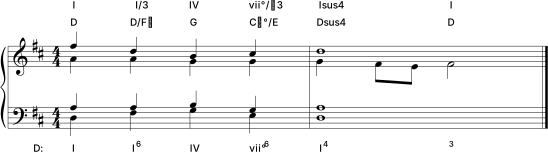
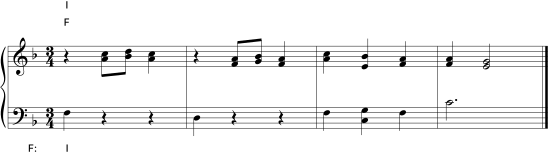
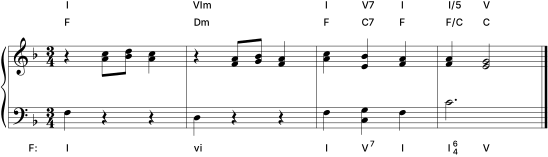
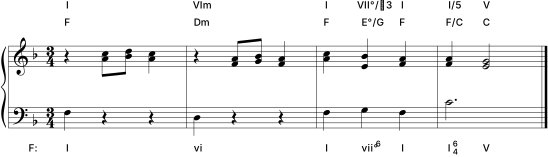
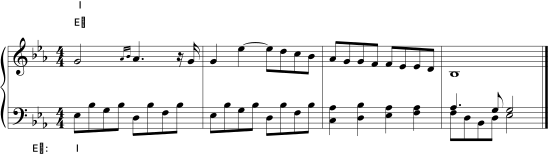
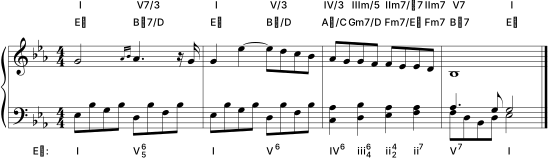
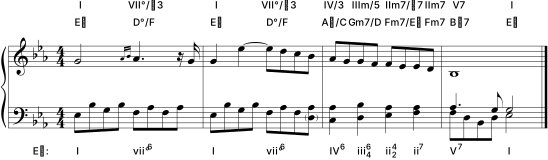
Analyze the progressions using traditional Roman numerals below, chord symbols and contemporary Roman numerals above.
Find the V or V7 chord(s), prior to the last bar, in the major or minor key progressions and replace it with a viiº triad in 1st inversion.
Download Classical Resolution Analysis Worksheet (PDF)
1.
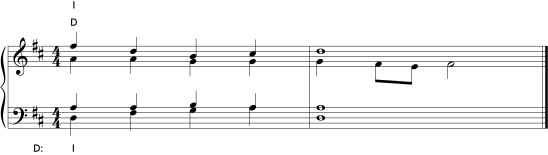
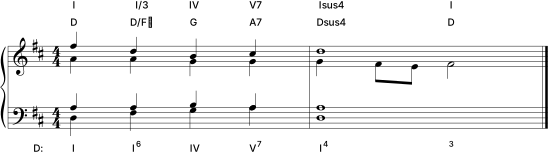
2.
3.
More Routes: The viiº7 and viiø7 Chords as Substitutes for the V7 Chord
You may remember from earlier lessons that in traditional music analysis a viiº7 chord is called a fully diminished 7th chord and a viiø7 (VII-7(
A viiº7 or viiø7 (minor 7(
viiø7 and viiº7 as Upper Structures of a V7(9) and V7(
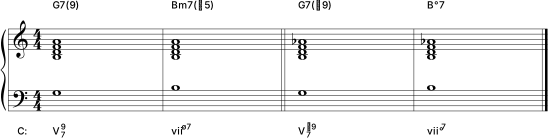
Since both function as somewhat weaker dominant chords, they are often used as a substitute for the V7 chord. The viiø7, although diatonic in a major key, is found less often than the viiº7 which can be thought of as being borrowed from the parallel minor. The viiø7 chord, used as a dominant chord in major-key classical music, is extremely rare in minor because the 7th of the chord is a major 6th from the tonic and doesn't support the sound of minor. Examine and listen to the following two examples to see and hear how the viiø7 chord has been used in classical harmony. Both examples are in a major key.
The viiø7 Substituting for a V7
In this example, Franz Schubert (1797-1828) uses the viiø7 at a climactic point. In this work, which is representative of the Romantic period (1825-1900), the viiø7 provides a less emphatic dominant pull to tonic.
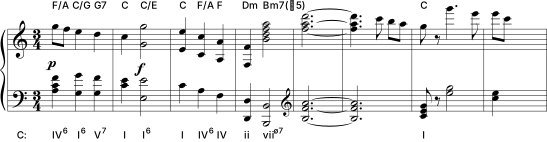
viiø7 to I in G Major
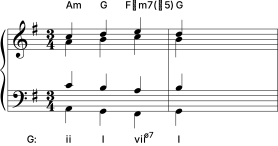
In the next example, Haydn uses the viiø7 to gently cadence on the I chord.
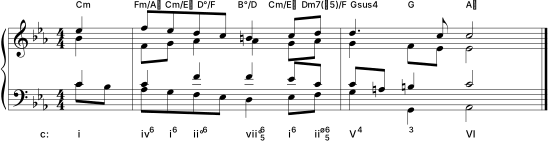
Bach's Use of the viiº7 chord in Minor
The viiº7, diatonic to harmonic minor, is used often as a substitute for V7. Notice how in the example below the root of the Bº7 chord resolves up by half step to C and the 7th (A
Mozart's Use of the viiº7 Chord in Minor
Mozart with a Modern Touch
In the following example, Mozart uses a viiº7 in 2nd inversion moving to a 1st inversion tonic minor to create a descending bass. Similar to Bach, Mozart resolves the root of the viiº7 (C
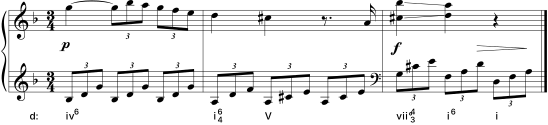
Secondary Diminished 7th Chords
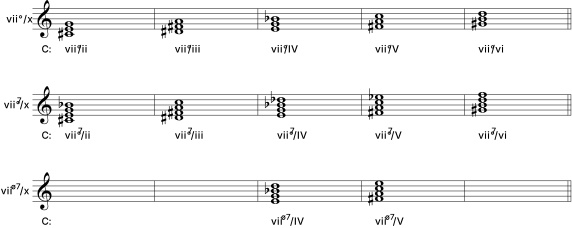
Secondary dominants, like the primary dominant, can be replaced with a diminished 7th chord. When substituting for a secondary dominant, they are called secondary diminished 7th chords. To construct a secondary diminished 7th chord, build the chord from one half step below the root of the target chord. Another way to think of the chord is that it is the upper structure of a V7(9)/x or V7(
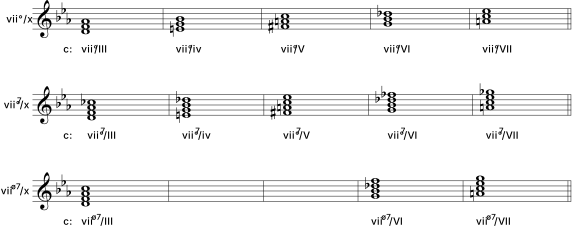
The charts below show the possible secondary leading tone triads, half-diminished, and fully diminished 7th chords in major and minor keys.
Major Key Secondary Diminished Chords
Minor Key Secondary Diminished Chords
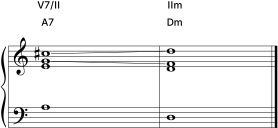
The dominant resolution concept (tritone resolution), similar to the V7 chord, applies to secondary dominants such as the V7/II resolving to II- shown in the example below.
V7/II to II- Showing Tritone Resolution C
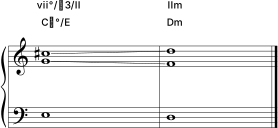
Tritone resolution also applies to secondary diminished chords. The upper structure of a V7/ii is viiº/ii.
viiº/ii Resolution:
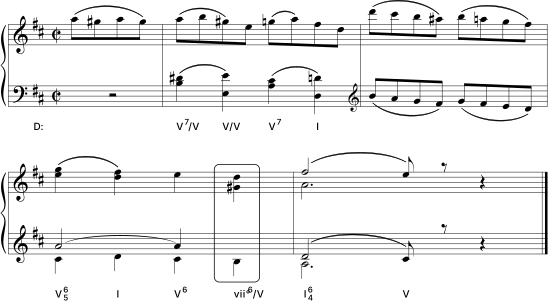
The following example is from a Mozart piano sonata and shows a viiº6/V resolving to V via a I6/4 chord.
viiº6/V:
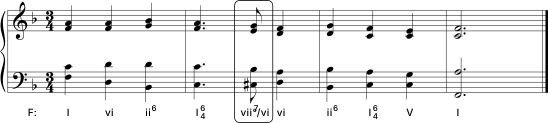
Similar to the viiº7 or viiø7, the typical resolution of a secondary diminished 7th chord has the root resolving up by half step and the 7th resolving down by step.
An arrangement of America with viiº7/vi resolving to vi:
Bach's Prelude and Fugue in C Major
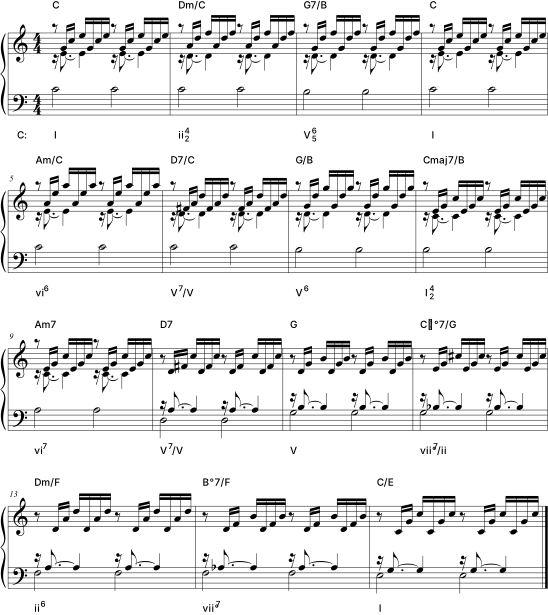
There is a beautiful example of a viiº7/ii and a viiº7 moving to I in Bach's Prelude and Fugue in C Major. The chords are in inversion due to a stepwise descending bass. This piece is a wonderful example of 7th chords being used in inversion. The slow harmonic rhythm and arpeggiations create clear voice leading. Notice that the roots of the diminished 7th chords resolve up by half step to their target chord and the 7ths resolve down by step.
Excerpt from Bach's, Prelude and Fugue in C Major:
Franz Schubert’s "Erlkönig"
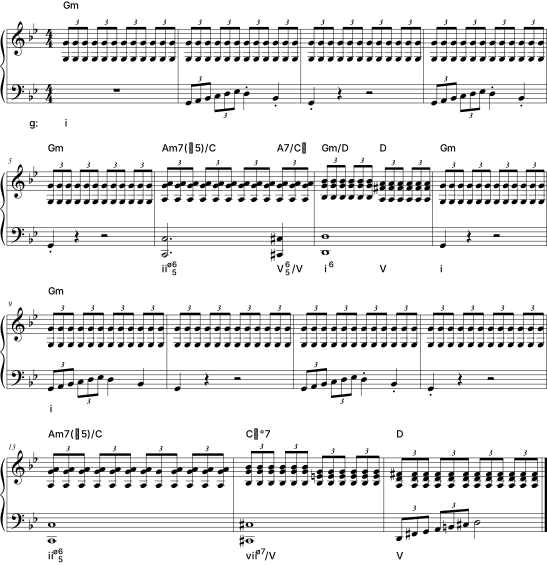
Franz Schubert creates a mysterious and dark mood in the introduction to his art song Erlkönig. The song is about a father galloping his horse through the dark forest while holding his sick son. The son says he sees the evil spirit Erlkönig coming to get him and take his life. The galloping hooves of the horse, and the tense scene, are depicted by the incessant triplets in the right hand of the piano. The chromatic motion of the chords, including the viiº7/V, gives the song an unsettled quality.
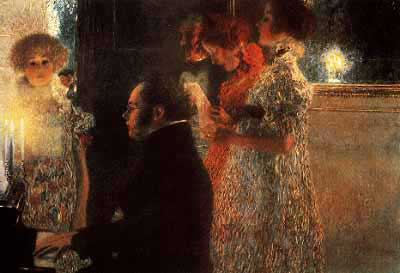
Franz Schubert
Schubert's Erlkönig Introduction:
More Information on Erlkönig
From: Music History of the Western World 2: Classical, Romantic, and Modern
One of Schubert's most famous art songs is the Erlkönig (Erlking), based on a poem by Wolfgang von Goethe (1749-1832). The piece is written for piano and voice and at the time was called a ballad, meaning a poem of stanzas that tells a story. The story tells an eerie tale from Danish Folklore, of a father with a sick child. The child is tempted by the evil Erlkönig and dies in his father's arms at the end of the story. The complete text of the poem is used in Schubert's musical setting. Below, is the poem in both the original German and the English translation.
Listen to and view the full version of Schubert's Erlkönig
Listen to the performance of the Erlking. Notice how the form of the music is driven by the text of the story.
Erlking is through-composed, which refers to music that is relatively continuous, non-sectional, and/or non-repetitive. A song is said to be through-composed if it has different music for each stanza of the lyrics. This is in contrast to strophic form, in which each stanza is set to the same music.
Ian Bostridge/Julius Drake. "Erlkönig, D.328," from Schubert: Liede. (EMI/1998).
There are four characters in the story: the narrator, the erlking, the child, and the father.
German text |
English translation |
|||
Wer reitet so spät durch Nacht und Wind? |
Narrator: Who rides so late through night and wind? |
|||
"Mein Sohn, was birgst du so bang dein Gesicht?" |
Father: "My son, why hide your face in fear?" |
|||
"Du liebes Kind, komm, geh mit mir! |
Erlking: "You sweet child, come along with me! |
|||
"Mein Vater, mein Vater, und hörest du nicht, |
Child: "My father, my father, and do you not hear, |
|||
"Willst, feiner Knabe, du mit mir gehn? |
Erlking: "Won't you come along with me, my fine boy? |
|||
"Mein Vater, mein Vater, und siehst du nicht dort |
Child: "My father, my father, do you not see there, |
|||
"Ich liebe dich, mich reizt deine schöne Gestalt; |
Erlking: "I love you; I'm charmed by your beautiful shape; |
|||
Dem Vater grauset's, er reitet geschwind, |
Narrator: The father shudders, he rides swiftly, |
Workshop: Secondary Diminished 7th Chords
This workshop is in two parts. Make sure to download the PDF, fill in your answers, and then check them with the answers below.
Download Secondary Diminished 7th Chords Workshop (PDF)
Notate the indicated secondary diminished 7th chords and put the appropriate chord symbol above the staff.
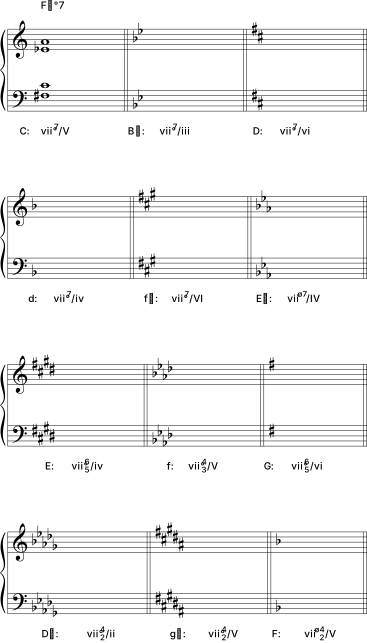
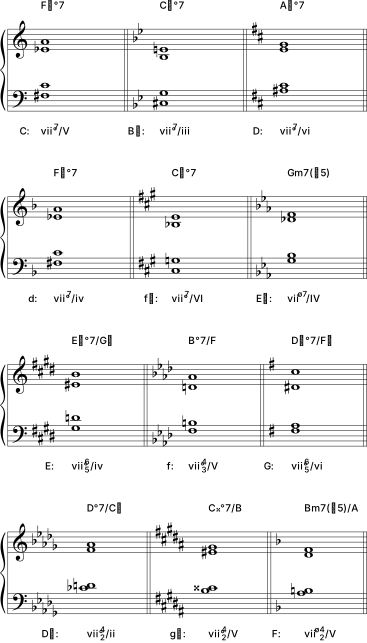
-
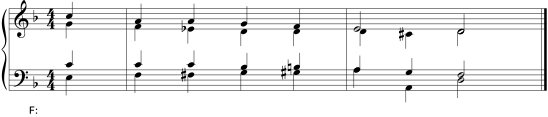
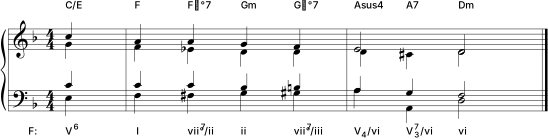
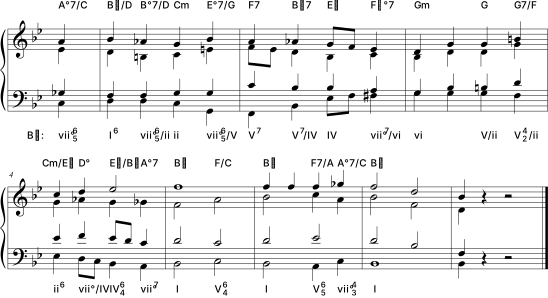
Analyze the following excerpt that contains several secondary diminished 7th chords by putting traditional Roman numerals below the staff and appropriate chord symbols above the staff.
The Three Types of Diminished Triads and 7th Chords
Now that you've learned how to construct secondary diminished triads and 7th chords, let's practice voice leading them to other chords.
Topic 1 presented the three types of diminished chords that can act as secondary leading-tone chords.
The Three Types of Diminished Triads and 7th Chords:
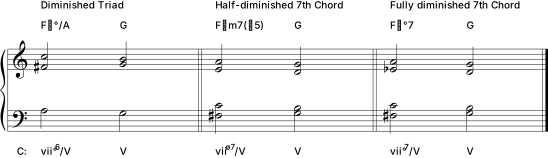
As the name implies, the secondary leading-tone chord in classical music acts like the leading-tone (viiº) chord in a major key or harmonic minor. It functions as a dominant and resolves up a half step to its target chord. The secondary leading-tone chord, like a secondary dominant, momentarily tonicizes the target chord.
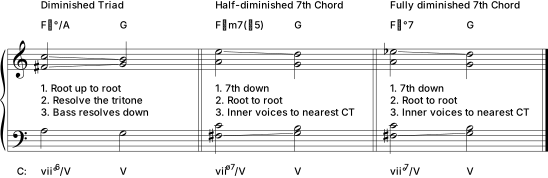
Creating smooth voice leading in the classical style from the secondary leading-tone chord to its target chord is relatively easy if you follow these procedures:
For both secondary leading-tone triads and 7th chords, resolve the root of the chord up to the target chord's root. In four-part harmony, don't double the secondary leading-tone chord's root.
For secondary leading-tone half-diminished (minor 7
Voice lead the inner voices of secondary leading-tone half-diminished and fully diminished 7th chords to the nearest chord tone.
Avoid doubling any altered tones in the chord, and whenever possible, resolve them up if they are raised and down if they are lowered.
Typical Voice Leading for the Three Types of Diminished Triads and 7th Chords:
Other Uses of the Fully Diminished and Half-Diminished 7th Chord
Although fully-diminished and half-diminished 7th chords in classical music typically resolve to their expected target, composers sometimes used them in other ways due to their expressive characteristics. The fully-diminished 7th chord has two tritones, and is therefore very unstable and was considered very dissonant. In early Western music, the tritone was called the "diabolus in musica" (devil in music) due to its dissonance and instability, and was often used by composers to represent evil, angst, or danger.
The Fully Diminished 7th Chord's Two Tritones:
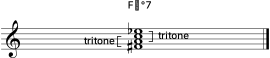
All three types of diminished chords were used by composers to create unrest and apprehension when the text or musical situation required it.
"Crucifixus"
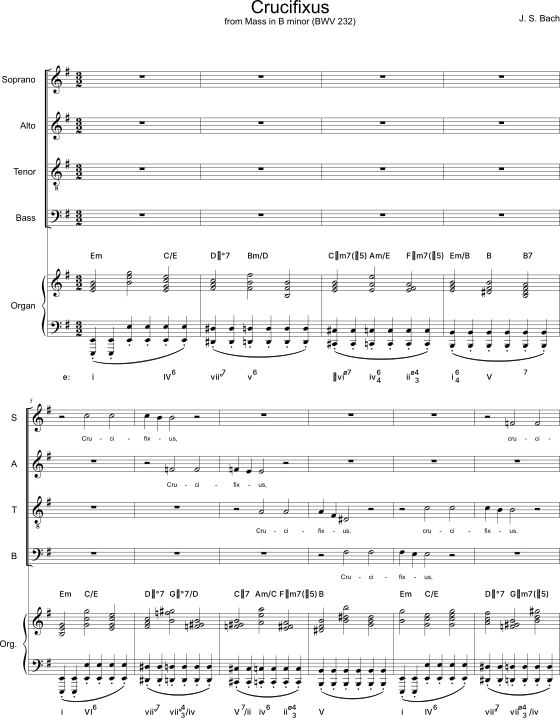
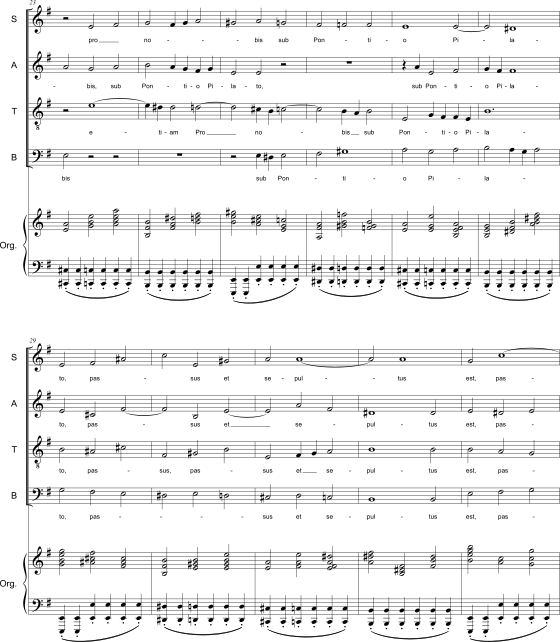
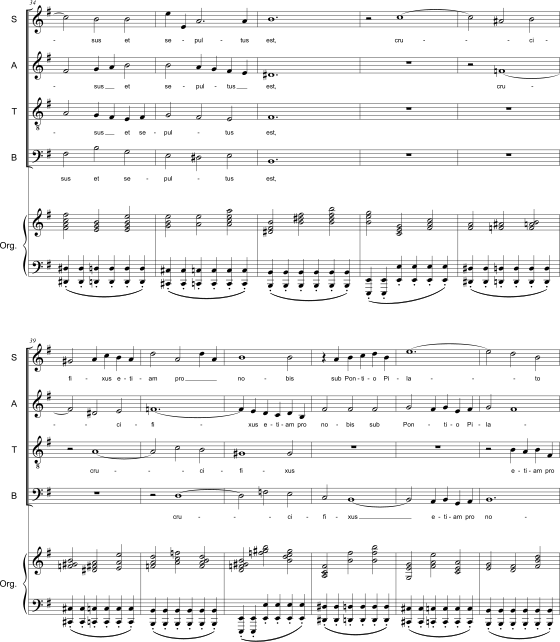
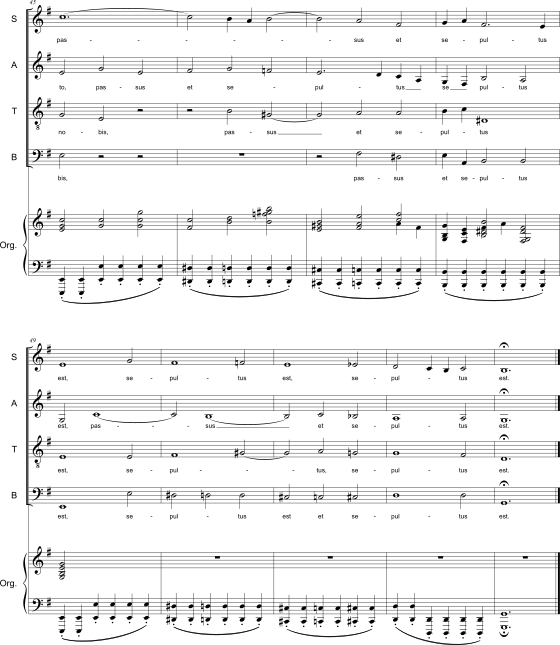
"Crucifixus," is a movement in Johann Sebastian Bach's monumental composition, Mass in B Minor. As the title implies, the movement expresses the suffering of Christ on the cross. Bach uses the fully and half-diminished 7th chords throughout the composition to depict Christ's suffering and anguish. The movement is set in E minor and utilizes the rich harmonic resources of the composite minor scale and Phrygian mode. The musical structure is built upon a repeating bass line that descends chromatically from the tonic to the dominant. A composition built on a repeating bass line, as you may recall from Music Theory and Composition 2, is called a "Passacaglia" and the repeating bass line is called a "ground bass." In this style of composition, the bass line remains constant while the melody and chords above it change. In "Crucifixus," the four-bar ground bass pattern repeats 13 times with the last pattern modulating and ending in G major, the relative major. The SATB choir, above the organ part, presents the primary melodic motif in imitation.
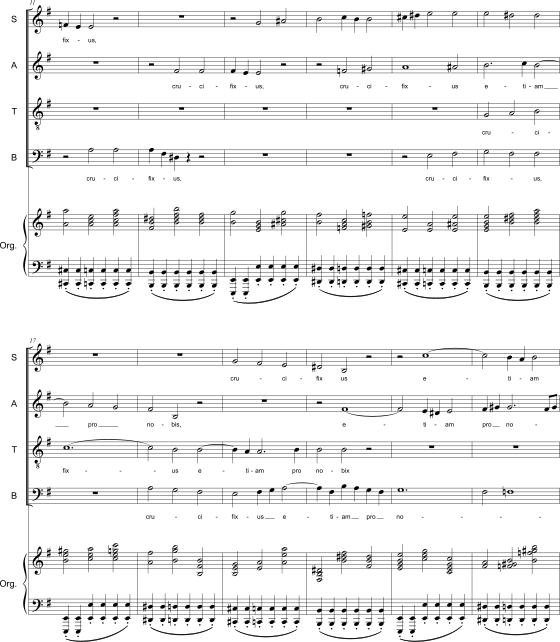
Listen carefully to the composition and review the score. You will hear and see the frequent use of diminished 7th chords that do not always resolve to their expected targets. The lack of resolution creates great unrest and tension. The first page of the score has been analyzed for you.
In bar 2, the first diminished 7th chord appears (viiº7), but instead of resolving to tonic (i), it moves to a v- chord in first inversion. Bar 3 has two half-diminished 7th chords, the first (C
As you listen and review the score, see if you can find more examples of fully and half-diminished 7th chords. Note how they are deceptively resolved or conventionally resolved. Bach was very forward thinking for his time period and was always looking for new harmonic techniques with which to express his musical ideas. In the following topics on contemporary use of diminished chords, you will see that both the conventional use of these chords found in Bach's music and the unconventional use have now become a staple of our harmonic vocabulary.
Bach's "Crucifixus" from Mass in B Minor
Workshop: Voice Leading Secondary Leading-Tone Chords
Workshop 1:
Voice lead the following secondary leading-tone chords to their indicated targets using the procedures shown above. Put the chord name above the chords and the Roman numeral below the staff.
Download Voice Leading Secondary Leading-Tone Chord (PDF)
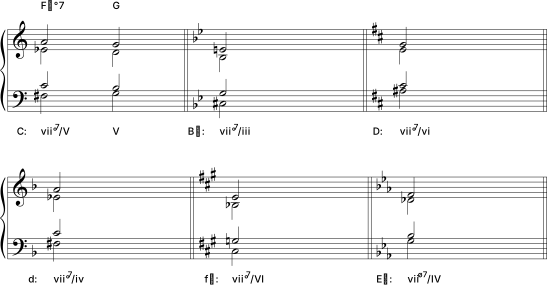
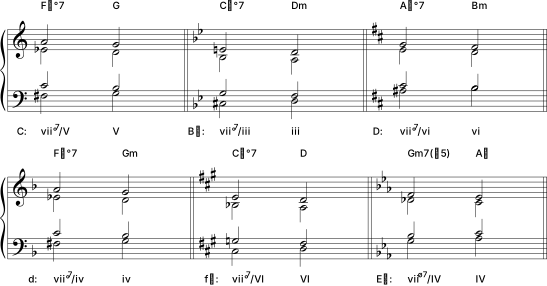
Voice leading secondary leading-tone chords when they are inverted, follows the same procedures as voice leading root position chords. The 7th of the chord resolves down by step, and when the root is in an outer voice it resolves up to the root of the target chord.
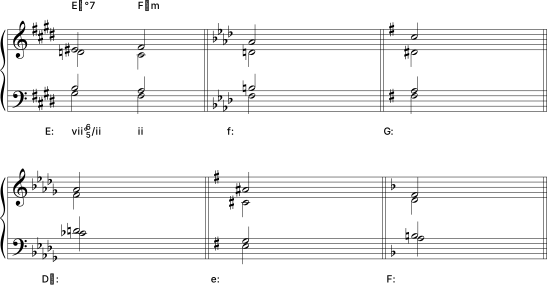
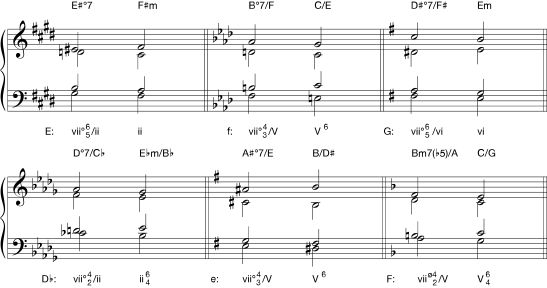
In Workshop 2, voice lead the inverted secondary leading-tone chords to their indicated targets. Put the chord names above the chords and the Roman numeral analysis below the chords. In order to keep smooth voice leading, many of the target chords will also be in inversion.
Workshop 2:
Workshop 3:
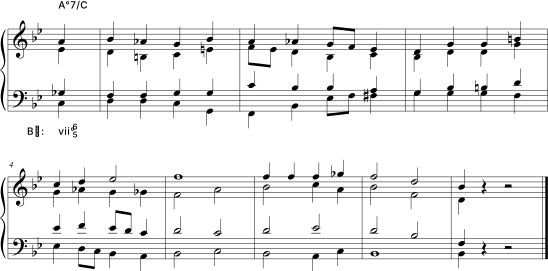
Analyze chorale excerpt below. Put traditional style Roman numerals below and chord symbols above. The first chord has been analyzed for you.
Up, Down, or Stay the Same: Categories of Diminished 7th Chords in Popular Music and Jazz
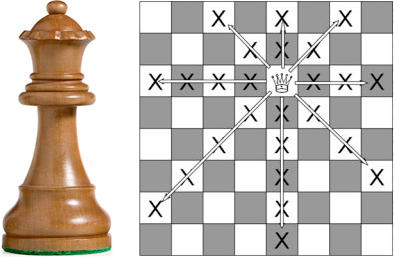
Like the queen in a game of chess, the diminished 7th chord is versatile and powerful, able to move in any direction. This topic will help you to understand the three principal uses of diminished 7th chords in jazz and popular styles and to learn to identify them in chord progressions.
The Diminished 7th Chord in Popular Styles
The diminished 7th chord (º7) is one of the most versatile harmonies available. This chord has a completely symmetrical structure. It is constructed of 3rds, but it is the only 7th chord in which all of the 3rds are of the same size—minor 3rds. (By contrast, the half-diminished 7th chord, ø7, contains a minor 7th above the root and is not symmetrical.)
Interval Structure of a Diminished 7th Chord: Stacked Minor 3rds:

This allows it to perform a number of different functions in tonal music. Before we get into the essence of this topic, that is, the functional uses of diminished 7th chords in popular music styles, let us look into some specific information about notational practices involving the chord.
Spelling Issues
Because of the symmetry of the chord, spelling all of the intervals literally as a minor 3, º5, and º7 can sometimes be confusing.
Technically Correct Spelling of G
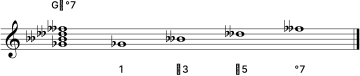
In the case of C
C
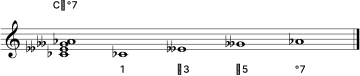
As is this . . .
C
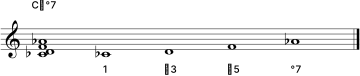
In practice, even the roots of diminished 7th chords may be spelled enharmonically, either to reflect the direction of the root motion or for ease of reading. Depending on context, C
The Diminished 7th Chord in Progressions
Although it has its origin in minor key harmony as the chord built on the leading tone, the diminished 7th chord is rarely used as a primary dominant function chord in popular styles. Instead, the diminished 7th chord has three general uses, almost always in the context of major key:
As a secondary dominant function (ascending diminished)
As a descending chromatic approach chord (passing diminished)
As an embellishing sound (auxiliary diminished) for the Imaj7 and V7 chord in a major key
It is a uniquely flexible chord type with many possible outcomes when it appears in a progression, so take plenty of time to understand and absorb each process. Please note that because of the multiple functions of diminished 7th chords, our practice is to refer to them in analysis by their root address in the key (i.e. Iº7,
Secondary Dominant Function: The Ascending Diminished Seventh
V7/VI and #Vº7
Its origin as a leading tone chord in minor key means that a diminished 7th chord can be used in place of a dominant 7th chord in a progression to achieve the same functional result. It acts as VIIº7 of the target chord. In the example below, G
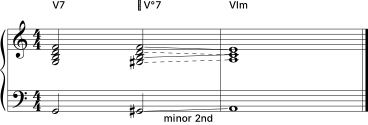
Listen to this example and feel the strong expectation of resolution up a half step created by the G
We analyze ascending diminished chords by their root in the key. In this case the root is
V7/III and IIº7
The same relationship exists between V7/III and
V7/III vs.
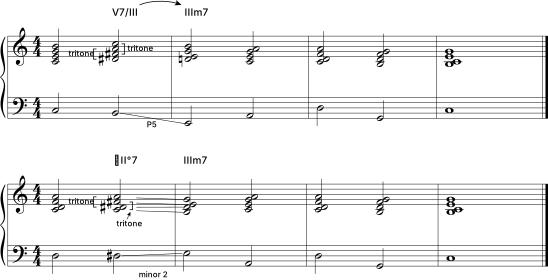
Another way for
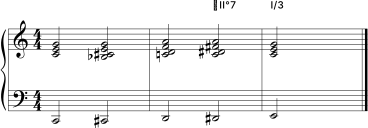
V7/II and Iº7
The
V7/II vs.
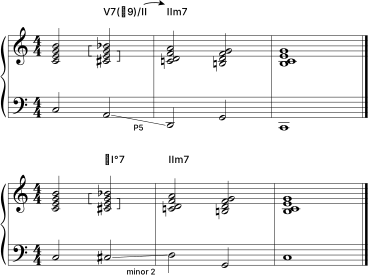
V7/V and #IVº7
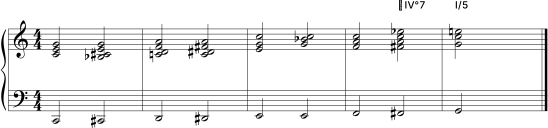
This progression is quite common in blues, gospel, and rock music.
Summary
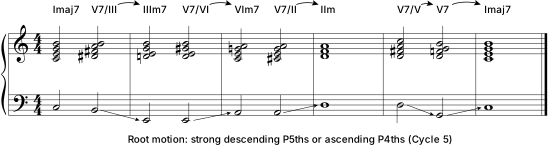
To recap and contrast, secondary dominant 7th chord progressions are notable for strong bass root motion by descending a perfect 5th (cycle 5).
Secondary Dominants with Cycle 5 Root Motion:
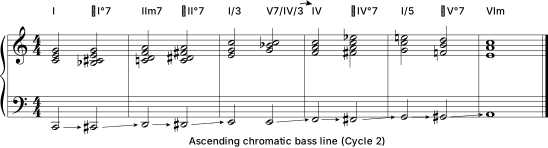
Diminished 7th chords with secondary dominant function are notable for dramatic ascending chromatic root motion (Cycle 2).
Ascending Diminished 7th Chords with Cycle 2 Root Motion:
The Diminished 7th Chord as a Descending Chromatic Passing Approach Chord: Passing Diminished
In this section we will look at a different kind of diminished operation: descending approach. In each of the following common chord progressions, the diatonic goal chord (II-7) is preceded by a chromatic approach chord.
Comparison of Descending Chromatic Passing Chords:
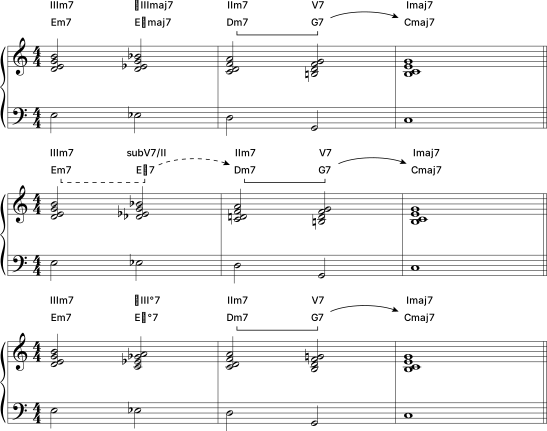
As the last phrase shows, another common use of diminished 7th chords is as a descending chromatic approach chord to a diatonic goal. The most common of these is
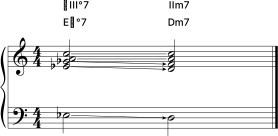
Listen to and view the use of
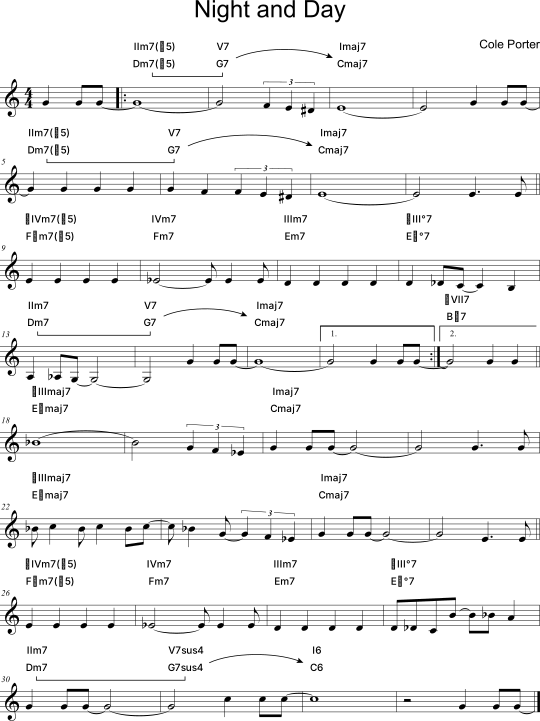
Remember: Context is important in identifying the function of a diminished chord.
VIº7
This function is rare, but is found in some tunes in the repertoire as a descending chromatic approach chord to the related II-7 of the V/IV. The Brazilian composer Antonio Carlos Jobim was fond of this progression. See his compositions "Wave" and "Corcovado" for examples.
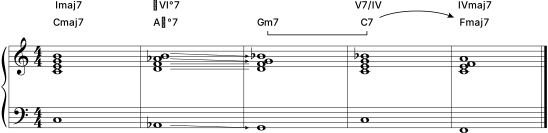
Summary
Diminished 7th chords may also be used as descending chromatic passing chords. The most common of these is
Embellishing Chords: Auxiliary Diminished 7th Chords
Auxiliary diminished chords are created by lowering the 3, 5, and 7 of Imaj7 or V7. Iº7 is used to alternate with I6 or Imaj7 for a mild pulsation of color without abandoning the tonic. It can also create a surprising delayed resolution to the Imaj chord. The lowered tones are usually resolved upward to the regular chord tones of the function.
Iº7:
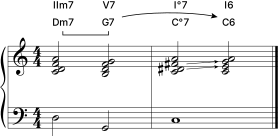
Similar to Iº7, the Vº7 chord is used to prolong or embellish dominant function, as in Herman Hupfeld's "As Time Goes By"—the classic theme from the film Casablanca or George Gershwin's "How Long Has This Been Going On?" . . .
Vº7:
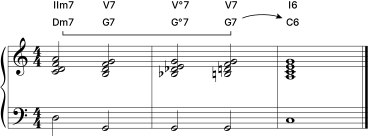
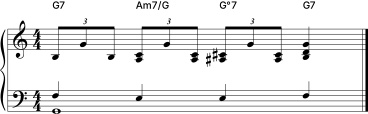
. . . or in this well-worn blues cliché.
Blues Walk-Up with Vº7:
Summary
Diminished 7th chords are also found in embellishments of the Imaj and V7 chord in popular songs.
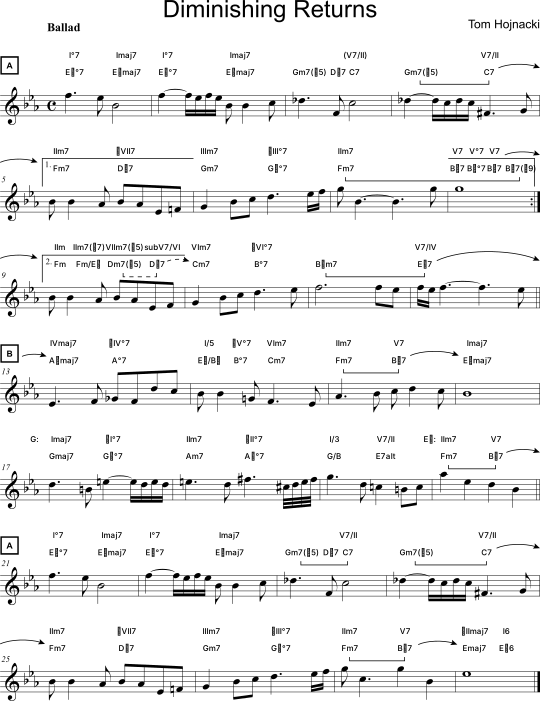
Workshop: “Diminishing Returns" Analysis
Listen to "Diminishing Returns." The attached PDF contains the arrangement of the song that contains every possible diminished function: ascending, descending, and auxiliary. Identify each chord in the arrangement with a chord symbol and then analyze the progression and check your answers against the answer key provided.
Download Diminishing Returns workshop (PDF)
Laying It Out: Chord Scales for Diminished 7th Chords
We have learned that the diminished 7th chord is versatile because of its special symmetrical properties. The symmetry of intervals in the chord also extends to symmetry of available tensions. There are four chord tones: 1,
Possible Tensions on a Diminished 7th Chord:

This means that there are four possible tensions for each diminished 7th chord!
The symmetric diminished scale expresses a diminished 7th chord with all four possible tensions—a whole step above each chord tone.
The Symmetric Diminished Scale:

We have encountered the tensions 9, 11, and
So what does this chord sound like, this C
Diminished 7th Chord with All Possible Tensions:
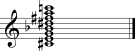
Do words like shocking or alarming come to mind?! The tensions by themselves produce a different complete diminished 7th chord. When added to the basic structure we now have what is referred to commonly as a double-diminished 7th chord. Duke Ellington used this chord to imitate the sound of a train whistle!
In any case, a diminished 7th chord with its full complement of tensions is a bit much for most musical situations. When voicing these chords with tensions the common practice is to use only those tensions diatonic to the key in order to reinforce the chord's function: ascending, descending, or auxiliary. Let's start with the ascending category of secondary function chords and work out their chord scales.
Ascending Diatonic Diminished Chord Scales
When we insert the notes of C major between the chord tones of ♯Vº7 we should notice something interesting. The notes of the chord scale for ♯Vº7 are identical to those of the V7/VI. This is understandable because both chords perform the same function. The chord scale for ♯Vº7 is the Mixolydian (♭9, ♯9, ♭13) scale starting on the 3rd degree. There are a couple of things of which to be aware. First, our practice with diminished chord scales is to not identify the harmonic avoid tones by scale degree. This is because enharmonic spelling is so common with these chords, the scales have eight different notes and the odd spellings can cause confusion.
Chord Scales for V7/VI and ♯Vº7:
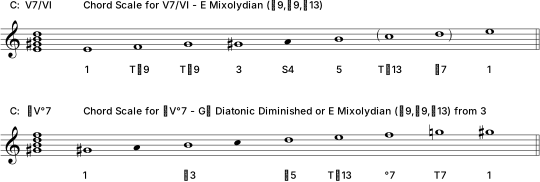
Secondly, the avoid tones in the ascending diminished 7th chord scales will usually be the root and 3rd of the target chord. Remember: In the secondary dominant chord scale, chord tone 5 and T♭13 are provisional avoid tones. The 5th of a dominant chord is non-essential. In a voicing, we have a choice of either 5 or ♭13. With the corresponding diminished 7th chord, the same pitches are not interchangeable since the ♭3 is an essential chord tone.
♯Vº7 Voiced with Tensions in a Progression
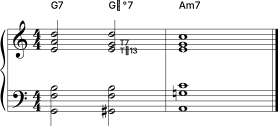
Notice in the previous example that tensions 7 and ♭13 on the ♯Vº7 add color to the voicing and create a common tone connection with the 5th and 7th of the A-7 chord.
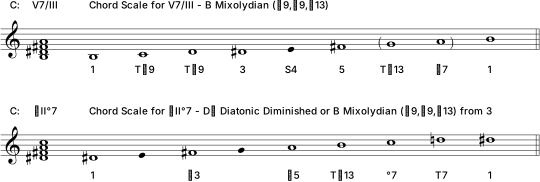
The same relationship exists between the chord scales for V7/III and for ♯IIº7 . . .
Chord Scales for V7/III and ♯IIº7:
. . . and also for V7/II and ♯Iº7:
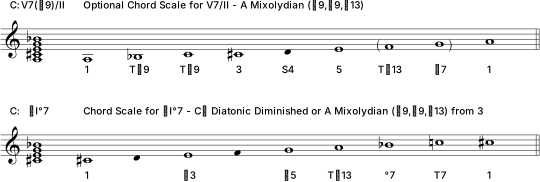
The Relationship Between #IVº7 and #IIº7
Because
Chord Scales for
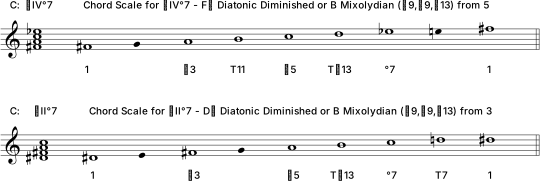
Optional Chord Scale for IVº7
Since both E and F occupy the space between E
An Alternate Chord Scale for

This tension is often found in blues melodies. The previous example shows mm. 5-8 of a blues in C. In m. 6 the blues scale melody creates a T7 relationship with the underlying
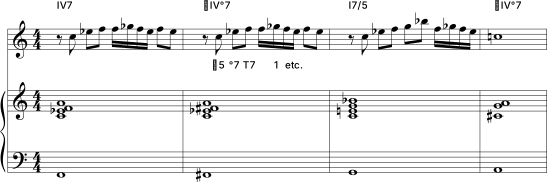
Descending Chromatic Passing Tones
The
Chord Scales for
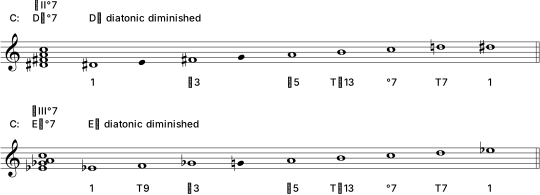
However,
T9 on
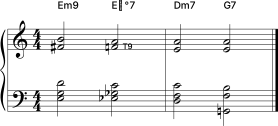
The figure below shows T7 and T
Melody on
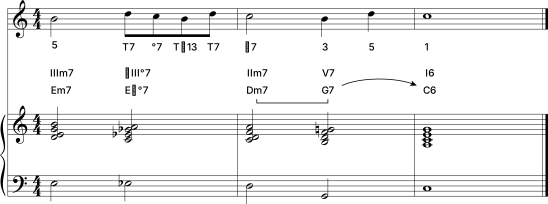
Although it is rare as a descending chromatic passing diminished, here is the chord scale for
Chord Scale for

Auxiliary Diatonic Diminished Chord Scales
The auxiliary diminished 7th chords have no root movement in resolution: Iº7 moves to I6 or Imaj7, and Vº7 moves to V7. Notice how the avoid tones in these scales are chord tones of the target chord.
Chord Scale for Iº7:

Chord Scale for Vº7:

In the following example Iº7 and Vº7 appear voiced with tensions. Notice the color and aural connection the tensions add to the chord progression.
Iº7 and Vº7 Voiced with Tensions:
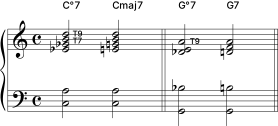
Summary
While all of this seems quite complex, in reality we are just adding the tones of the prevailing key to each of the diminished 7th chords that function in that key. A note that is a whole step above a chord tone is an available tension. Those that are a half step above a chord tone are harmonic avoid tones. If there are two possible options between chord tones, choose the note that best connects with the chord of resolution!
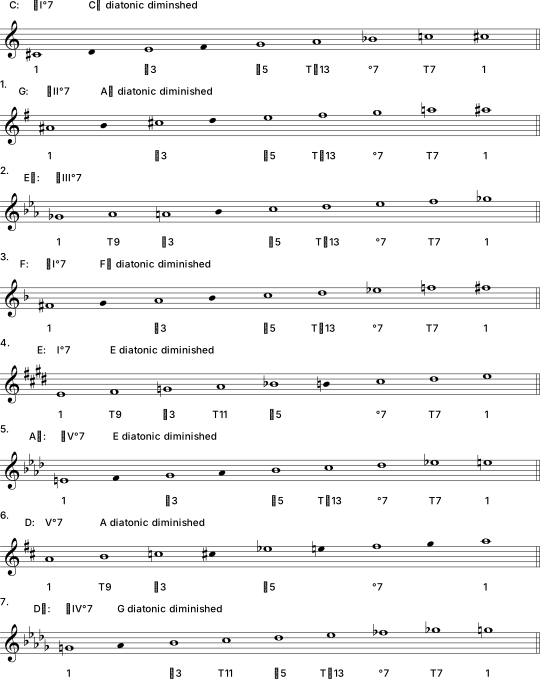
Workshop: Chord Scale Functions
Download the attached PDF. Spell out the chord scales for all of the functions. This topic has presented the scales all in the key of C. Pay attention to the key signature of each example and spell the chord and its scale in the key that is given. Check your answers against the answer key provided.
Download Chord Scale Functions workshop (PDF)
Composers on Composing: Methods on Starting a Composition
This week, in lesson 5, three more composers share their thoughts on composition.
The question posed to this week's composers is:
Do you start a composition by sketching or notating by hand, inputting notes into a DAW (Digital Audio Workstation), or straight into a notation program such as Finale or Sibelius?
Composers interviewed in week 5:
Sheldon Mirowitz—Film and television composer
Marti Epstein—Contemporary classical music composer
Richard Boulanger—Technologist and computer/electronic music composer
Recap
In this lesson you have learned how to:
distinguish between different categories of diminished 7th chords in a diatonic context and understand their most typical resolution patterns. Recognize and analyze all types of diminished 7th chords correctly in progression
express all contemporary diminished 7th chord types as chord scales. Explore tensions in voicings
understand the conceptual use of the diminished triad and 7th chord in classical styles. Recognize and appropriately analyze these harmonies in context
realize chord progressions involving diminished chords from figured bass with appropriate voice leading technique for classical styles
understand and comment on how a selection of professional composers feel about hand writing their compositions compared to using a notation program and how they feel it affects their work
In lesson 6 we will be learning about the phenomenon of non-chord tones and harmonizing approach tones.